
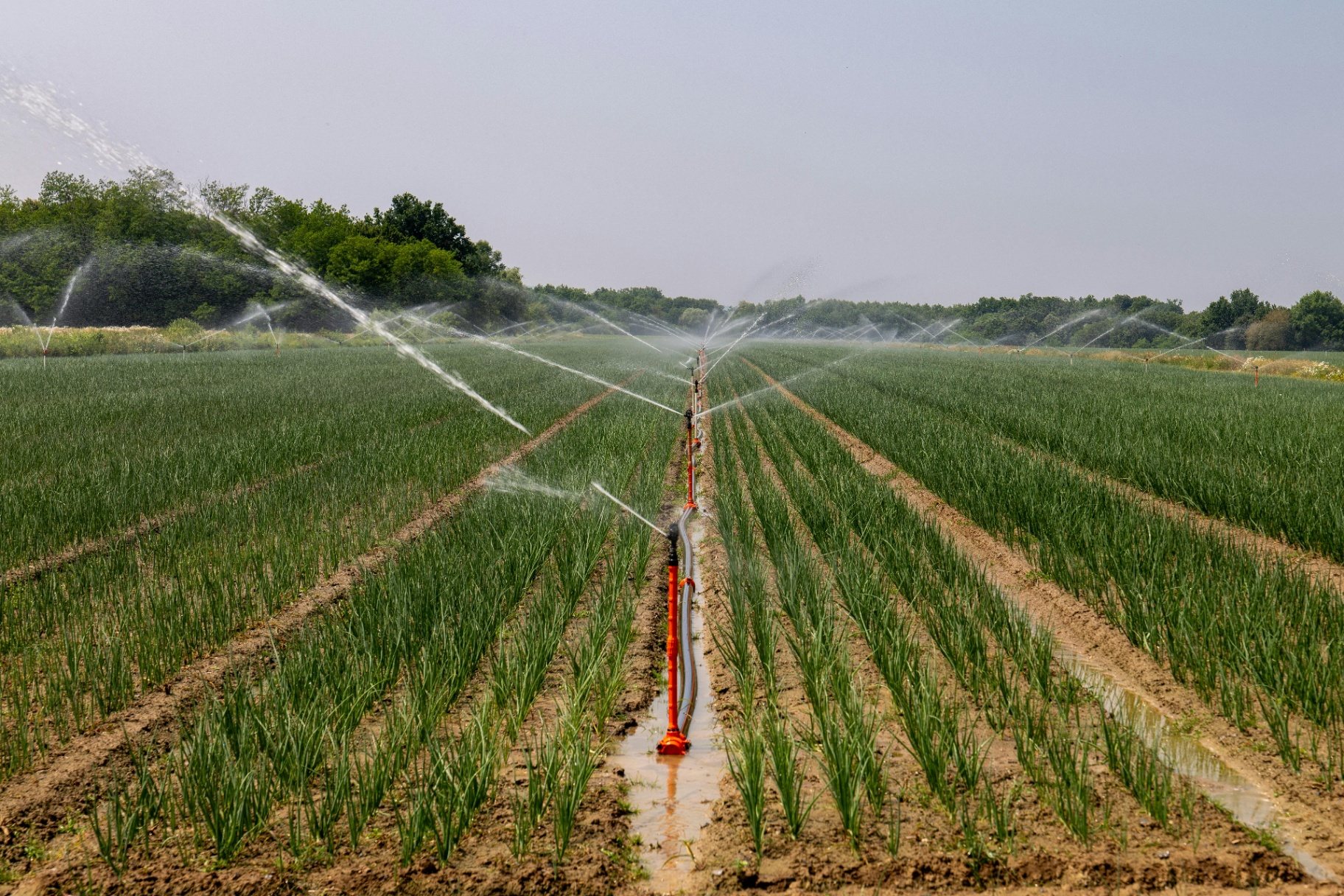
SURVIVOR WEEDS
Thistles and hedge bindweed come through the MLHD passes every season. They form patches in the field and are hard to control with standard onion products without major damage, so a targeted correction is needed.
higher yield
Less crop stress thanks to targeted spraying
less crop protection product
Every litre saved counts more with a shrinking product range
from flight to weed map
Weed map ready within 24–48 hours
Crop info
The MLHD system (Multiple Low-Dose Herbicide applications) keeps germinating weeds broadly under control with 8 to 12 low-dose passes per season. But every year stubborn species survive the system: thistles, hedge bindweed and potato volunteers appear between the rows. Because onions form no canopy closure, they get every opportunity to compete with the crop and set seed. Croptic detects those survivors from the drone and delivers weed maps that let you correct precisely, only spraying where it is really needed.
SURVIVOR WEEDS
Thistles and hedge bindweed come through the MLHD passes every season. They form patches in the field and are hard to control with standard onion products without major damage, so a targeted correction is needed.
POTATO VOLUNTEERS
Potato volunteers from the previous cropping year shoot up quickly between the onions. Because onions have no canopy closure, volunteers get plenty of light and space. Drone detection makes a targeted corrective spray possible.
SEASONAL CALENDAR
The optimal flight window for correcting MLHD survivors runs throughout the growing season: as soon as thistles, hedge bindweed and potato volunteers rise above the crop, but before they set seed. Set onions are 4 to 6 weeks ahead of seed onions in every phase.
Season calendar
Set onions Feb–Mar, seed onions Mar–Apr
MLHD: 8–12 passes, no canopy closure
Root weeds after MLHD rounds
Volunteers from previous potato crop
Early varieties Aug, storage Sep–Oct
Step 01
You or one of our partners fly a drone over your field as soon as the MLHD survivors are visible. The camera captures every detail in high resolution.
Step 02
Our AI analyses the imagery and distinguishes thistles, hedge bindweed and potato volunteers from the onions and from each other. That way you decide which survivors go into the weed map.
Step 03
You load the weed map into your GPS sprayer with section control. Nozzles open and close automatically over the weeds. You only treat where needed, and the rest of the field stays untouched.
REGIONS
Set onions
15 Feb – 15 Mar
Seed onions
10–31 Mar
Drone window
15 Apr – 15 Jul
Harvest
Aug – Oct
Seed onions
20 Mar – 10 Apr (clay soil)
Drone window
1 May – 25 Jul
Harvest
Sep – Oct
Set onions
20 Feb – 15 Mar
Seed onions
10–31 Mar
Drone window
20 Apr – 15 Jul
Harvest
Aug – Oct
CONTEXT
Active substances are being withdrawn, alternatives are getting more expensive and less effective. The need to work more precisely grows every season. Mechanical hoeing as an alternative quickly costs an extra €170 per hectare. Spot spraying based on drone analysis is no longer a luxury, it is the way to manage weed pressure with the product range that is still available.
Spray less. Know more.
Read also: Sugar beet · Potatoes · Cereals · Grassland
We only use functional cookies and local storage for your language preference and forms. No tracking, no ads, no third parties. Read our privacy policy.