Croptic among De Standaard's six AI-openers
Landerco-founder, Croptic
Published 7 min read
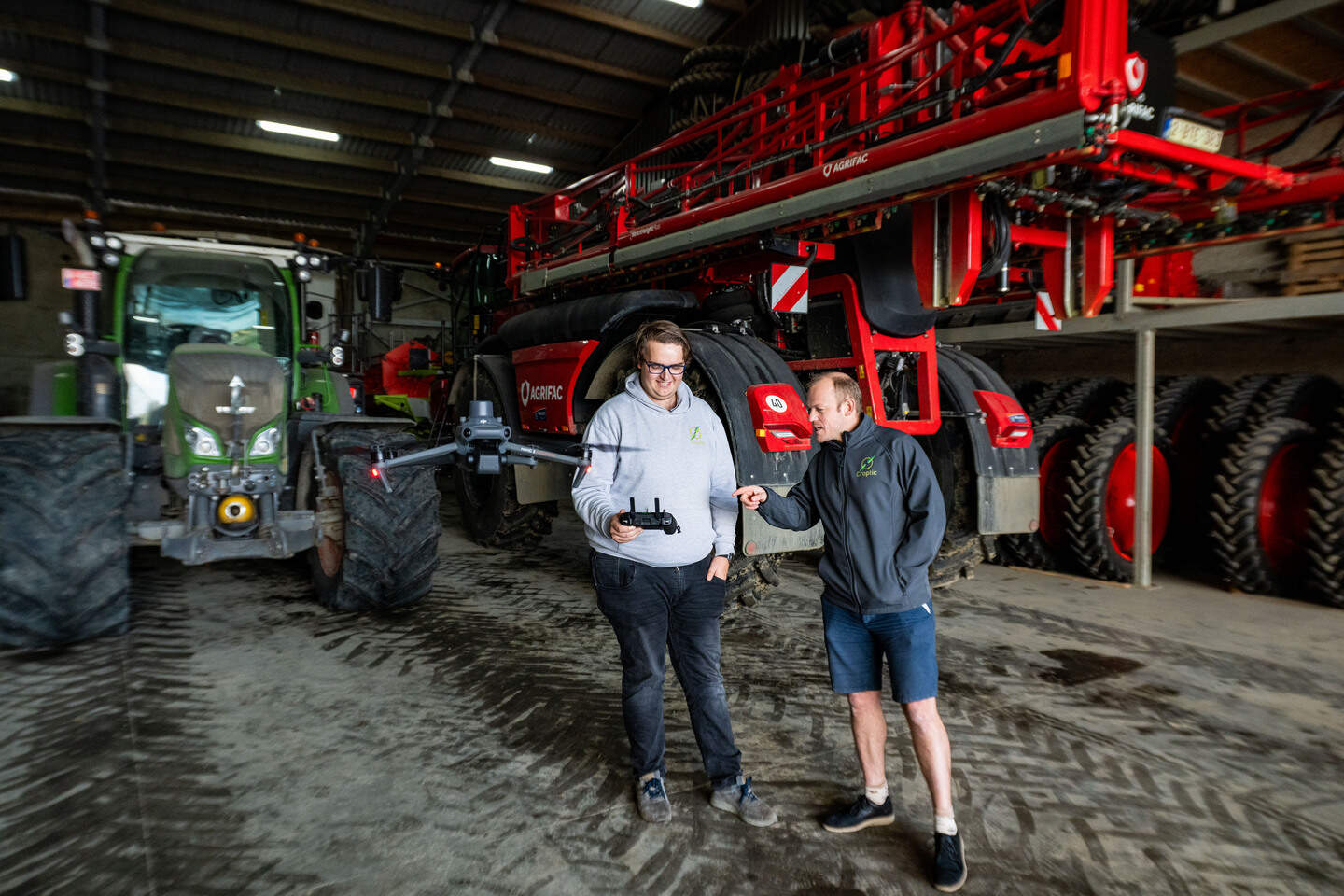
Belgian newspaper De Standaard selected Croptic as one of the six AI-openers of 2026. A professional jury picked six from 107 Belgian AI start-ups, and we are the only one from agriculture. On 21 November the paper presented the six, each with an in-depth portrait. Want to support us? You can vote for the public prize at standaard.be/ai-openers. The page is in Dutch.
Photo at the top: Lander Pauwels Malengier and Ruben Van De Vijver with the drone. © Fred Debrock
What are the AI-openers?
AI-openers is a competition run by De Standaard, together with Agoria among others. The paper was looking for Belgian start-ups that use AI to make a positive difference to how we live, work and care. To enter, a company had to be Belgian, at most five years old, with at least three and at most 35 people, with customers or first partnerships, and with AI at the core of its product.
107 start-ups submitted an application. A jury with people from imec, imec.istart, Wintercircus, VLAIO, Agoria, Unizo and StarApps kept six. De Standaard summed it up like this: from better medical scans and medication to fewer pesticides and less paperwork, from spotting forest fires sooner to smarter renovation. The part about fewer pesticides, that is us.
Who are the six AI-openers?
It is strong company. EDGX sends computers into space that analyse satellite images up there, so a forest fire or an oil spill is noticed much sooner. Nuclivision turns a short, grainy PET or SPECT scan into a sharp image, with less radiation for the patient. Sightera uses AI to search for drugs against cancers that are almost impossible to treat. Spotable measures roofs with AI and immediately prepares the quote for the roofer. Tekst takes over tedious administrative work in offices.
And then there is Croptic, the small farming company among space technology, medical imaging and cancer research. De Standaard called us "AI with boots in Flemish soil". We would happily hang that line up in the shed.
What does Croptic do?
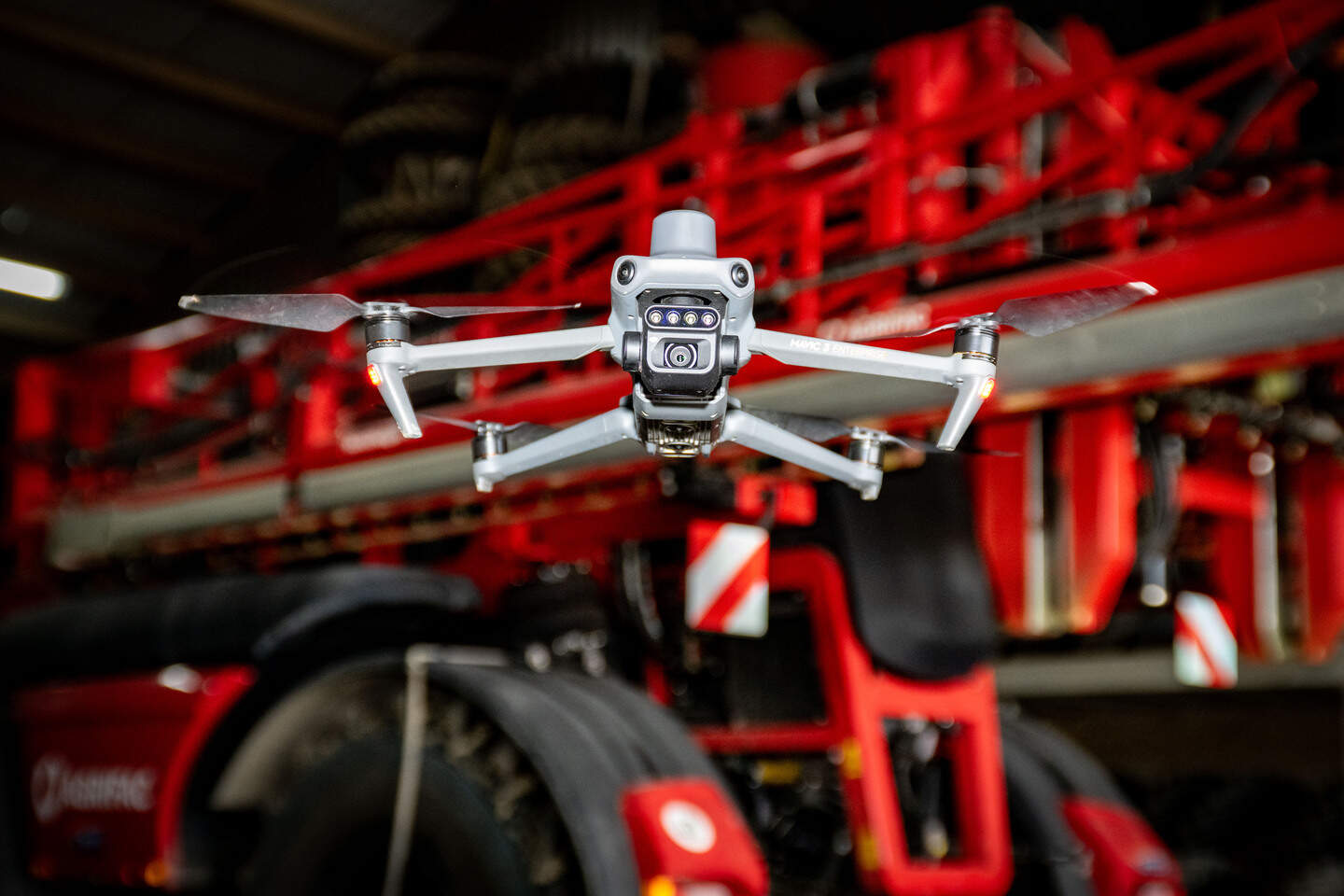
A drone photographs your field. On those images our AI marks the weeds and then Lander (co-founder) checks every map before it goes out. Within 24 to 72 hours you get a task map, a shapefile or ISOXML, for the terminal of the sprayer already in your yard. You drive the field as always, but the sections or nozzles only open where weeds grow.
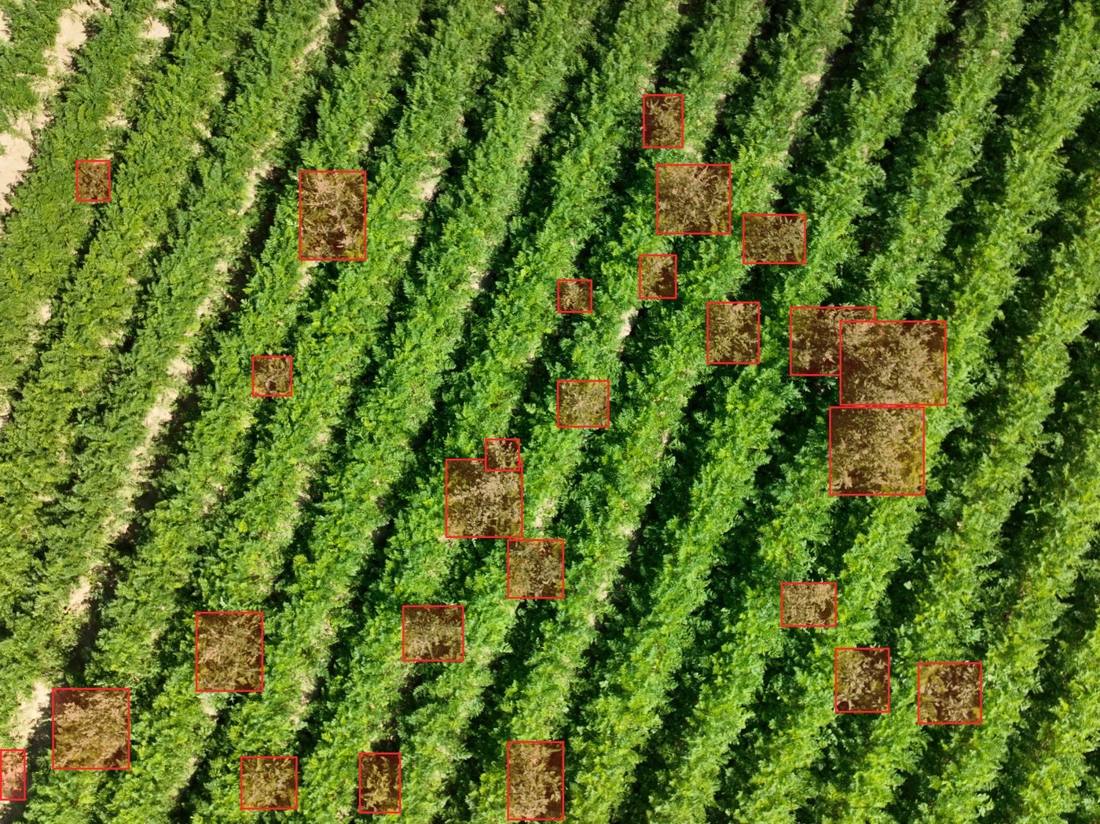
That saves up to 95 percent of product compared to a full-field treatment, depending on how many weeds there are. Over the 2025 season the saving averaged 86 percent. You can read how it works step by step on how it works.
From the start of 2025 to 26 October 2026 we made 608 weed task maps for our customers, covering 3,155 hectares in total. On half of those maps, less than 12.6 percent of the area was sprayed.
What makes us different?
Croptic was founded by two people who come from farming. Lander Pauwels Malengier grew up among tractors as the son of a farm machinery dealer and was already flying as a drone pilot for agriculture during his studies. Ruben Van De Vijver is a farmer's son, did his PhD on AI in agriculture and built the AI model behind Croptic. Our office is at Wintercircus in Ghent, but our work happens in the field.
That is why we do not sell a new machine. Lander put it like this in De Standaard (translated from Dutch):
"We want to make existing machines smarter. They sometimes cost more than half a million euros, and they have technology that is used very little today."
The weeds are on the map, and the map goes into the sprayer the farmer already owns. The hard part is not the model itself. Ruben: "Training the AI model was not the difficulty. The challenge is making it work on every field and in every condition." When the model saw every fallen leaf on a meadow as a weed in autumn, we retrained it straight away. You only see that kind of work when you stand on those fields yourself.
Why do we take part?
First of all, for the attention. We think it matters to help farmers keep up with the times, and for that they first need to know what is possible. Most growers do not yet know that targeted spraying is possible with their own sprayer. At trade fairs and field events we mostly talk to people who are already working on it. A portrait in De Standaard also reaches the arable farmer, the contractor and the adviser who have never heard of it.
We also take part to show that AI in agriculture already works today, on ordinary fields. As Ruben puts it: "Agriculture and the environment really do not have to be opposites, as it often seems." Less product is good for the grower's bottom line and for the surroundings of his field.
And we are a small start-up. At Wintercircus and in Belgium we can use all the help we can get to grow. We are fully committed: our goal is to become a global player in AI for agriculture. A scan by imec, a year of coaching or a place in Tech Dragons of Asia brings us a step closer.
What can we win?
There are two prizes. The jury prize is a package worth 42,000 euros. It includes a cash prize of 10,000 euros from De Standaard, an AI Cost and Scalability Scan by imec, a place in Tech Dragons of Asia through Agoria, a year of Wintercircus membership for the founders and a Unizo membership.
The public prize is a package worth 30,000 euros, including AI Founder Insights by imec, the JCI Youth Leadership Prize from JCI Belgium and memberships of Agoria, Wintercircus and Unizo. You help decide who wins the public prize. Both prizes will be awarded on Tuesday 15 December at Wintercircus in Ghent.
How do you vote for Croptic?
Go to standaard.be/ai-openers. There you can read the portraits of the six AI-openers and cast your vote. Choosing Croptic means choosing AI that works in the field. Feel free to pass the link on to anyone who works in farming.
Frequently asked questions
What are De Standaard's AI-openers?
A competition by De Standaard, together with Agoria among others, for Belgian start-ups that make a positive difference with AI. From 107 applications a jury chose six laureates for 2026.
Who are the six nominees?
EDGX, Nuclivision, Sightera, Spotable, Tekst and Croptic. Croptic is the only one from agriculture.
When will the winners be announced?
On Tuesday 15 December at Wintercircus in Ghent. Both the jury prize and the public prize are awarded there.
Do I need to buy a new sprayer to work with Croptic?
No. The task map goes into the terminal of your existing sprayer, which switches the sections or nozzles. The finer your sprayer switches, the smaller the patch that gets product.
How much product do you save with a task map?
Up to 95 percent compared to a full-field treatment, depending on how many weeds there are. Over the 2025 season our customers saved 86 percent on average.
Sources
- De Standaard: Croptic lets farmers spray only on weeds (20 November 2026, in Dutch)
- De Standaard: AI-openers, the six laureates and voting for the public prize (in Dutch)
- Agoria: De Standaard and Agoria look for the best AI start-ups in the country (13 October 2026, in Dutch)
- Media Marketing: De Standaard launches a competition for Belgian AI start-ups (14 October 2026, in Dutch)